

Carrying Firewood
PHOTO ESSAY BY PHOEBE JESKE
Buenas tardes. An elderly man greets me with a “good afternoon” at his corner store. I ask him for a bottle of water. My eye catches the World Cup game at the hair salon across the street, and we make idle conversation for a moment about the game: me, a little embarrassed about my broken Spanish, him, endlessly gracious.
I’m in Peru for a month with my parents and brother. My brother and I graduated from college this May, and my mom calls this trip the “hands-on part” of our university education. We want to go further than Machu Picchu and educate ourselves via cultural immersion.
These photos arose out of the desire to bite into a place, to savor its flavor. Although I cannot fully release my American identity, I’ve attempted to capture Peru’s streets through every day, ordinary eyes.
Although I’ve visited 30 countries, this is my first time in South America. I’m not qualified to give out an award for the world’s most hospitable country, but if I could, I’d give it to Peru. Every interaction, down to the conversation at the corner store, was kind and generous.
I am deeply grateful to the families who graciously invited me into their homestays. I’ve been inspired to welcome strangers and live slowly because of this place, and I hope that you, too, receive that inspiration through these photos.
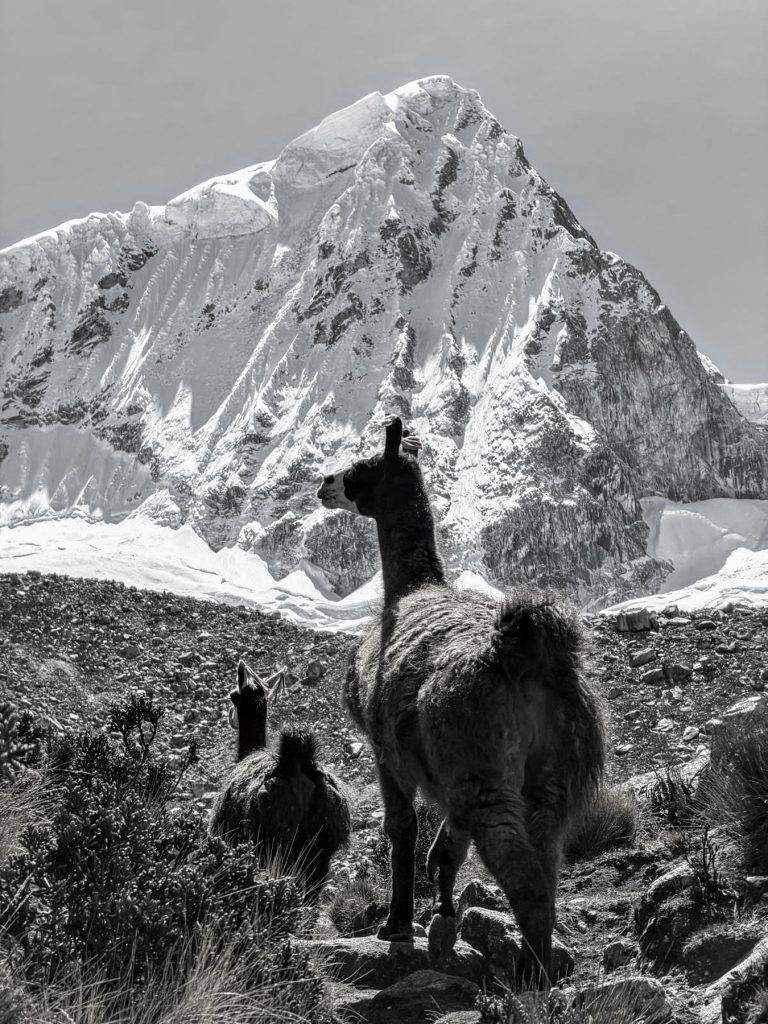
Llamas in the Cordillera BlancaLlamas feed at 15,000 feet (4,600 meters) in the shadow of Nevado Pisco, in the Cordillera Blanca range. Local people domesticated llamas in the Andean highlands 4,000 to 5,000 years ago, making them among the oldest domesticated species anywhere on earth. Llamas are pack and transport animals, while their alpaca cousins are bred for fiber.
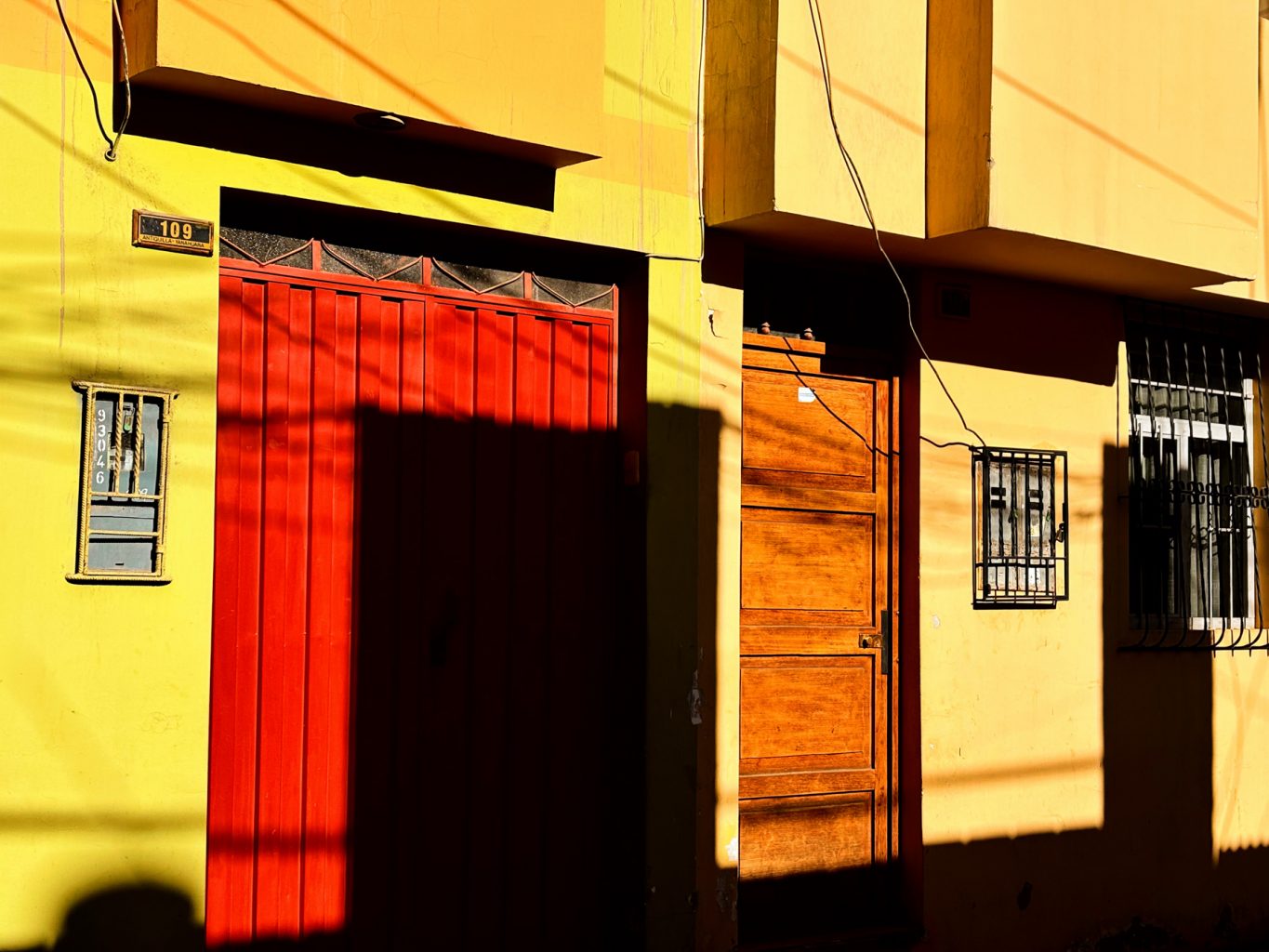
Street in Yanahuara Sharp sunlight illuminates a street in the Yanahuara neighborhood of Arequipa, Peru’s second largest city. Yanahuara is named after the pre-Inca Yanaguaras people who once farmed here. Although the Inca have saturated popular culture, Peru’s history is much deeper than the Inca alone. Around eight major pre-Inca civilizations lived throughout the country, including the Caral, the oldest civilization in the Americas.
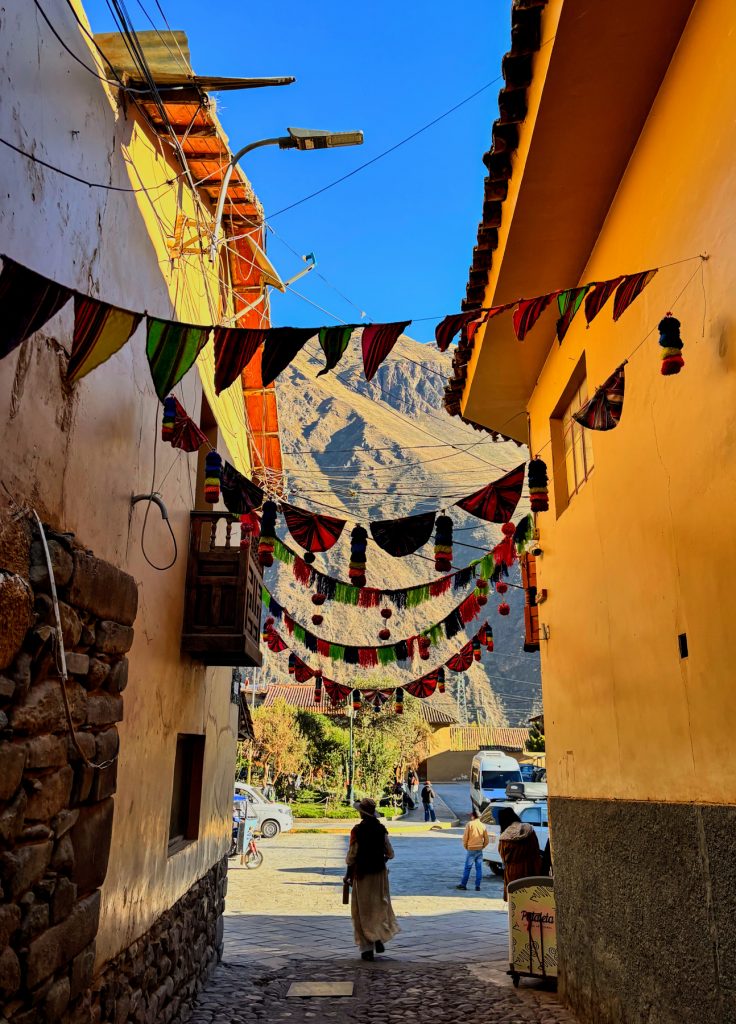
Ollantaytambo A woman walks beneath colorful banners in Ollantaytambo in southern Peru. The style of her hat is distinct to Ollantaytambo, a living Inca town that has been inhabited continuously since the 15th century. The town is also known for its Inca ruins. Ollanta’s cobbled streets and water channels are virtually unchanged from those that Emperor Pachacuti commissioned in the 15th century.
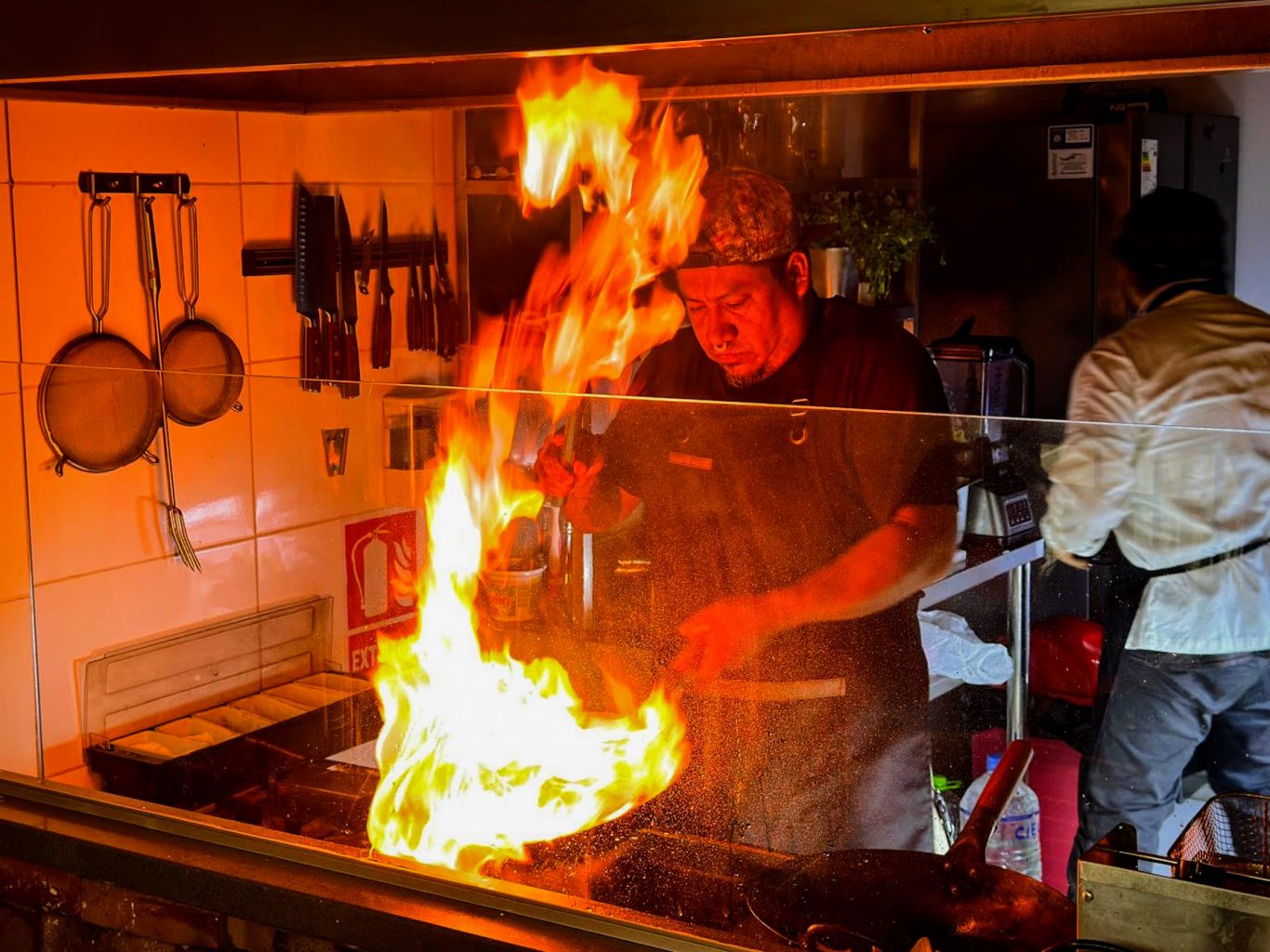
Peruvian Cuisine Jose Baker, a Peruvian chef and missionary, sears lomo saltado at his pay-what-you-can restaurant, Inti Ayllu. His wife runs a community art initiative in the same building for local children. Lima’s fine dining consistently ranks among the best in the world, with Maido in Lima’s Miraflores district named the best restaurant in the world in 2025.
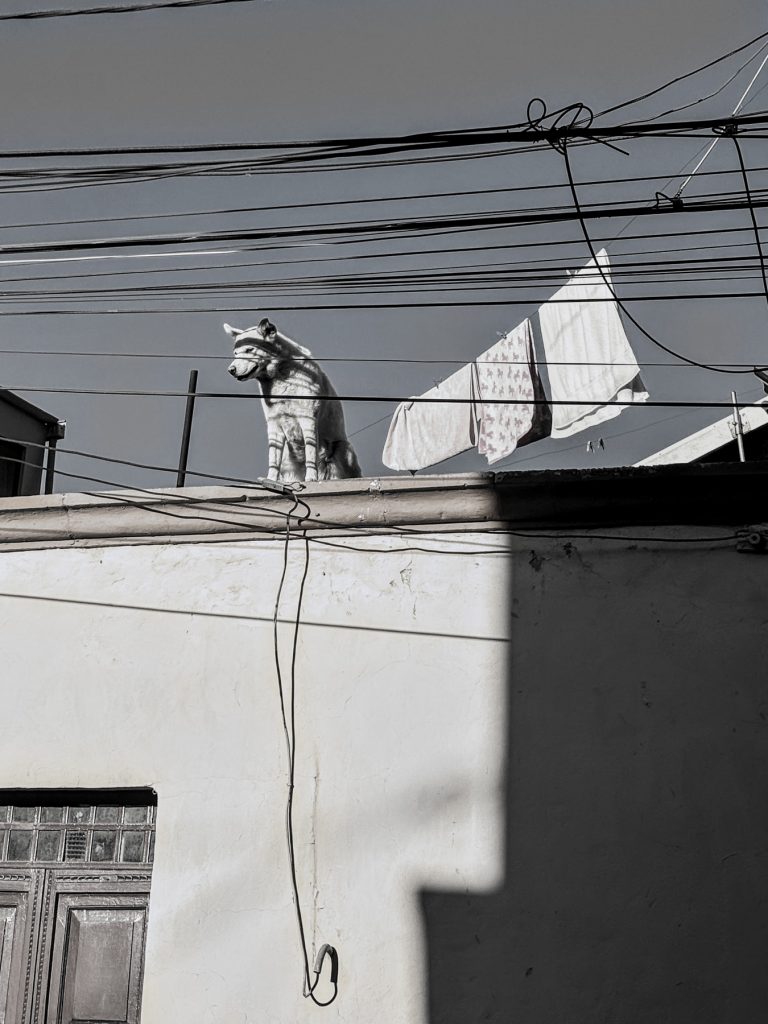
Stray Dog A dog overlooks the street in Arequipa. About 6 million stray dogs call the streets of Peru home, sleeping in front of shop doors and eating out of the trash. Pet abandonment is common. Many “owners” feed dogs in exchange for property protection, so this dog is almost certainly on duty.
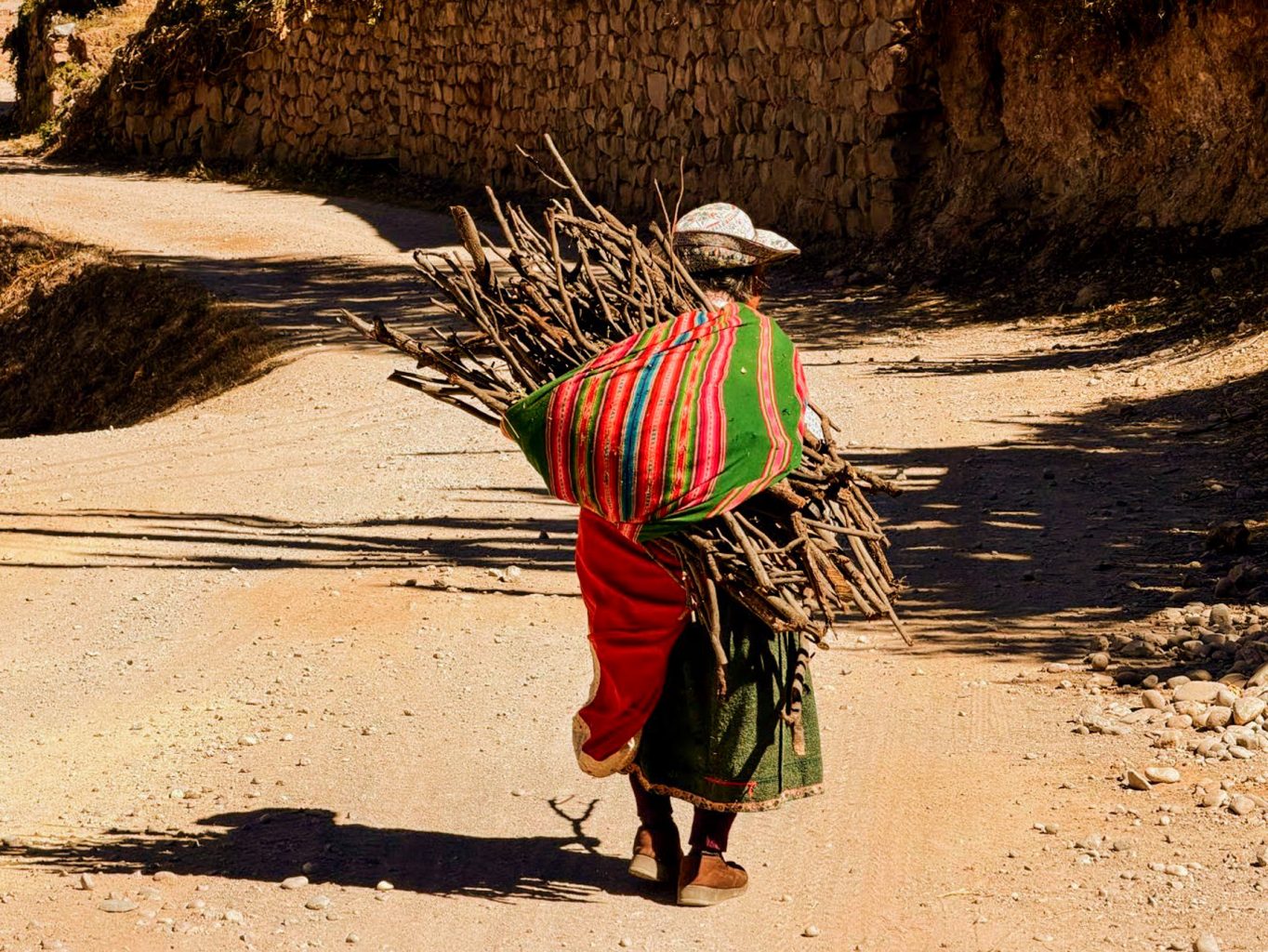
Carrying Firewood An elderly woman carries a bundle of firewood in Colca Canyon, near Arequipa. The striped textile is an aguayo, a traditional Andean carrying cloth. Women often use aguayos to carry produce, goods to sell, and children. The textile patterns and the shape of the hat mark a woman’s ethnic identity and sometimes marital status.
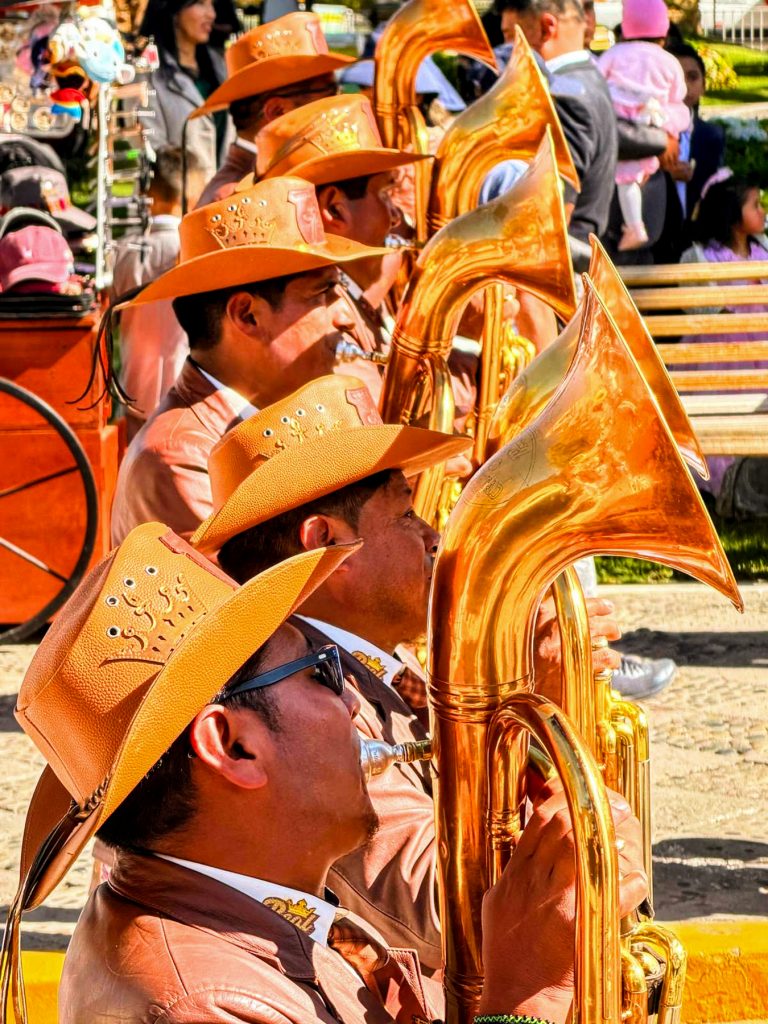
Wedding Band A wedding processional band fills the main square of Arequipa. Countryside musicians copied Spanish army bands in the late 1800s, forming village bands, or bandas de pueblo. For weddings, these bands play distinctly Andean genres like huayno, creating an interesting juxtaposition of Spanish instrumentation and Andean repertoire.
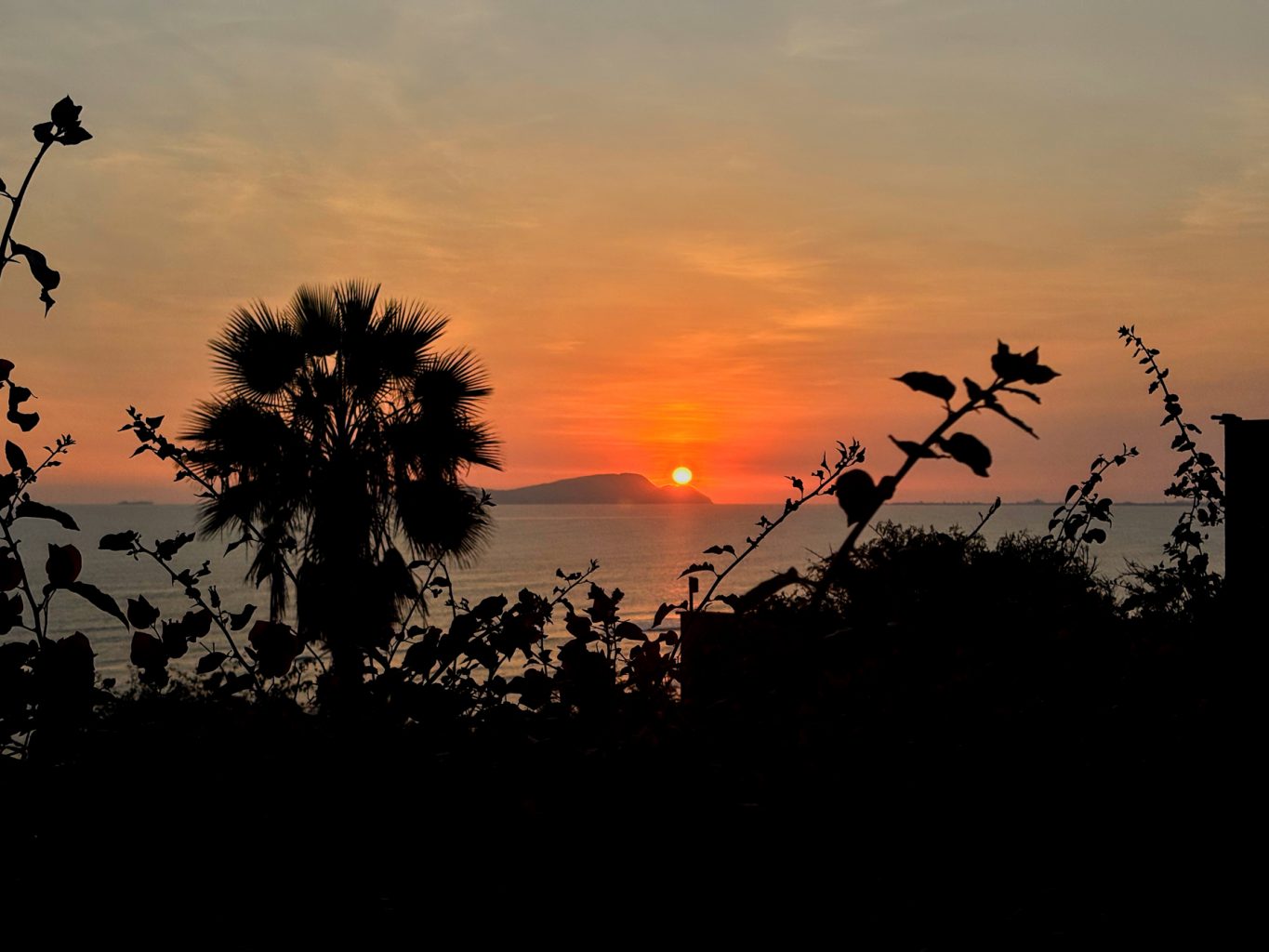
Pacific Sunset Sunset over San Lorenzo Island from Lima’s Miraflores district. Lima is the only capital in South America positioned with the ocean due west, meaning the sun sets into the water from the coast every day of the year. On nice nights, it feels like half of Lima descends to the cliffs of Miraflores and Barranco to watch the sun paint the sky red over the ocean. San Lorenzo Island is the largest on the Peruvian coast, but it’s closed to the general public and functions as a naval base for the Navy of Peru.
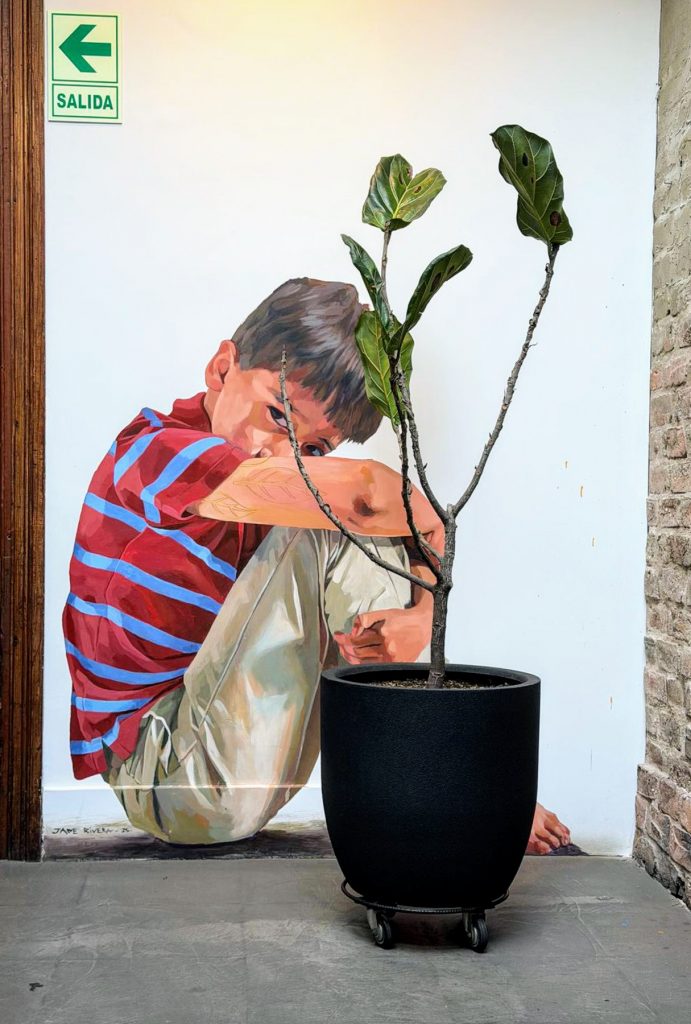
Jade Rivera Mural Peruvian artist Jade Rivera has painted murals in more than 20 countries worldwide. This one is located at the Galería named for him in Lima’s Barranco district. His distinctive neo-realist style explores the intersection of nature, street art, and Latin identity. In this piece, the leaves on the boy’s arm mirror the fig tree placed in front of the painting, almost as if the plant is entering into the mural itself.
Phoebe Jeske
Phoebe Jeske started shooting at 17, when a stranger mailed her a free film camera. She learned photography from her dad, and she still works in film and phone. After graduating in May 2026 from Wheaton College with degrees in computer science and communication, she is moving to Washington, D.C., in September to build software, a career choice her poetic side is still reviewing. She spent a month in Peru with her family during the summer of 2026 and mostly photographed what she happened to be standing in front of. Her photographs ask the same question her faith does: Where is love in the ordinary?